

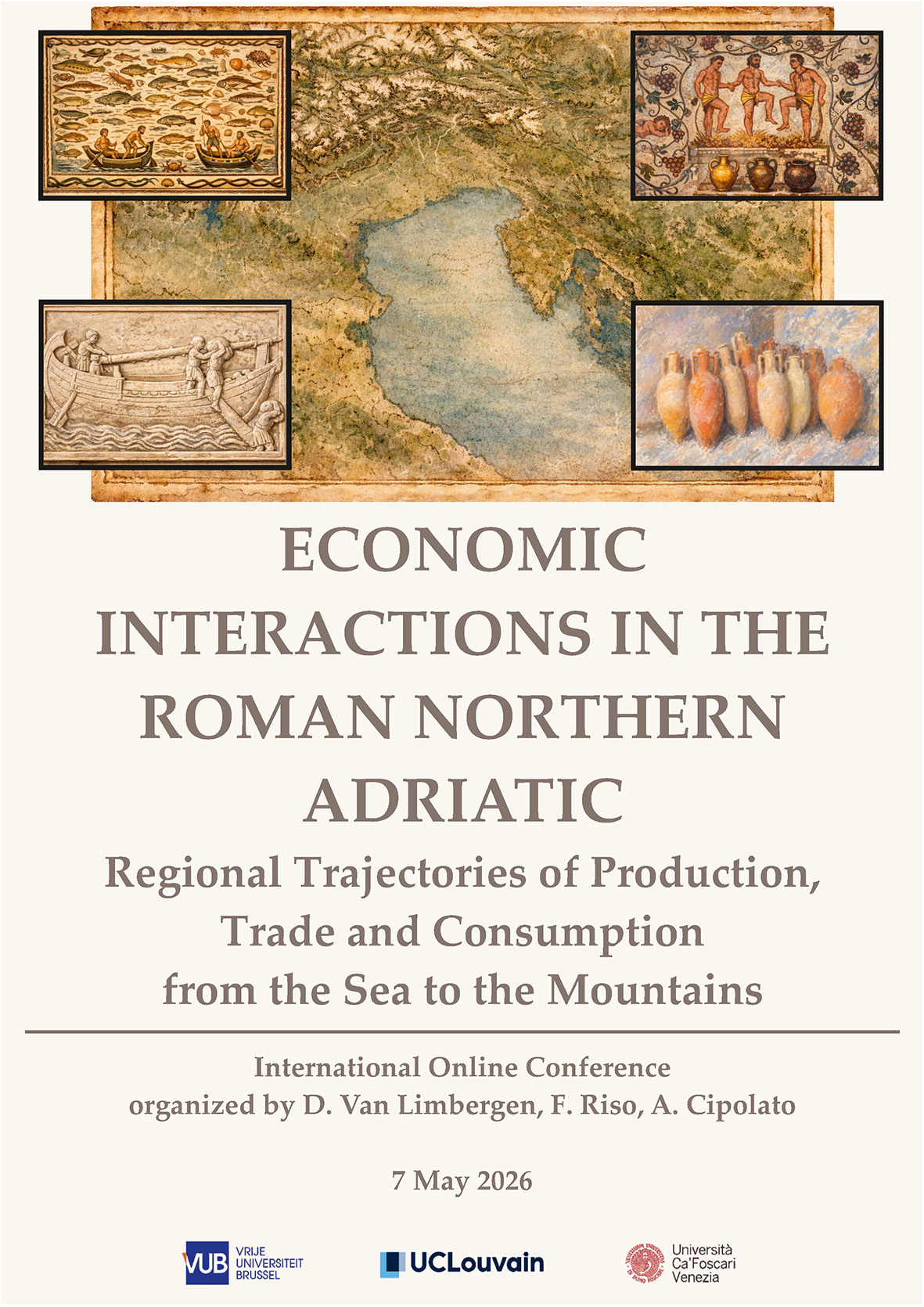
Economic interactions in the roman northern Adriatic
Join on Teams
Organised by
Federica Maria Riso (Université Catholique de Louvain)
Dimitri Van Limbergen (FOST – Vrije Universiteit Brussel)
Andrea Cipolato (Università Ca’ Foscari Venezia)
Subject
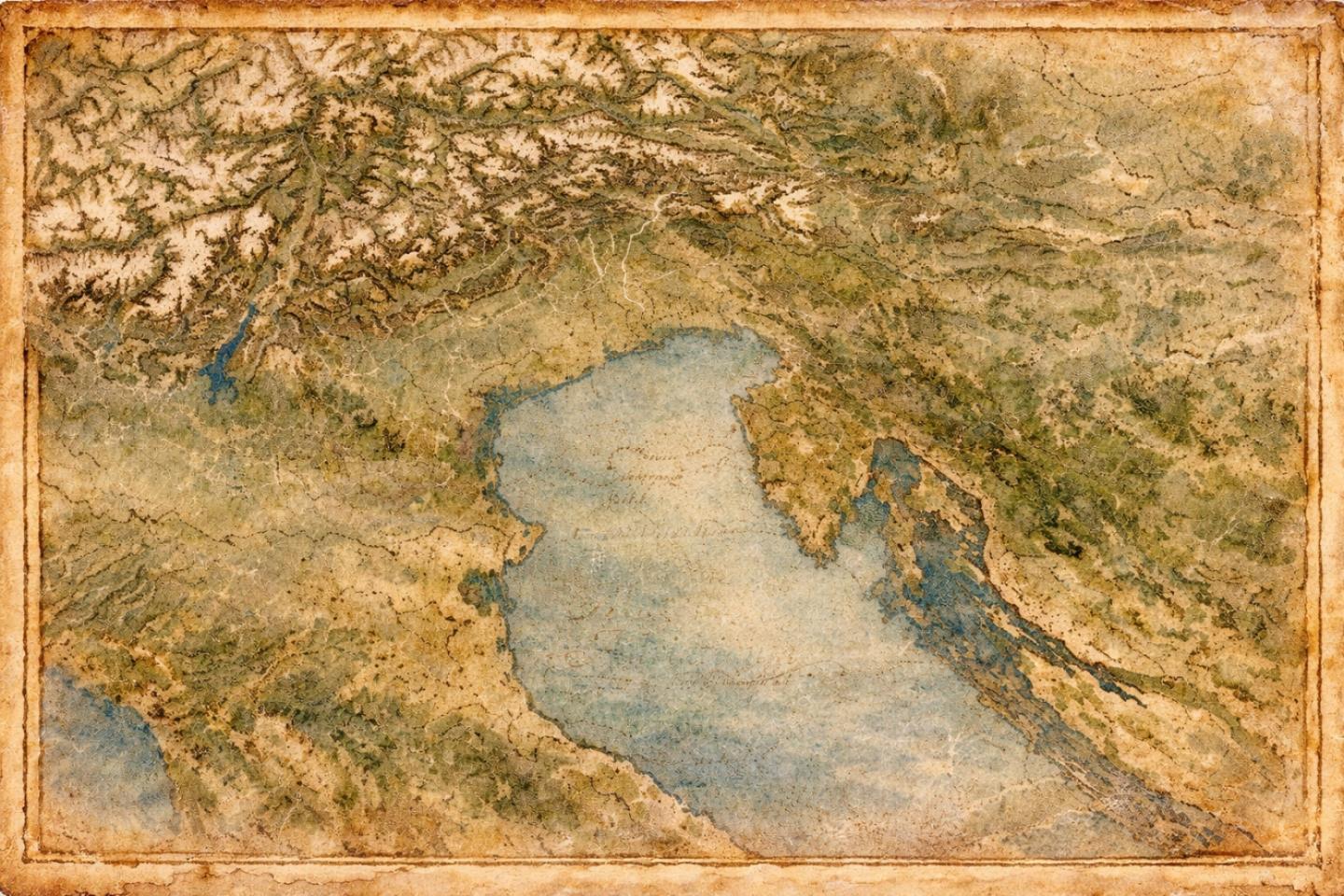
For decades, Roman economic narratives have centered on the Tyrrhenian coast and the western Mediterranean, reinforcing the centrality of regions stretching from Campania to Hispania in classical scholarship. Only recently have scholars begun to question the limits and lacunae of this historiographical bias, increasingly recognizing the Northern Adriatic as a vital—yet still ill-understood—component for reconstructing the commercial and ecological dynamics of the Roman world. The Northern Adriatic—running clockwise from Ravenna to Pula and encompassing the regions of Emilia-Romagna, Veneto, Friuli-Venezia Giulia and Istria—has rarely played a leading role in scholarly discussions on the Roman economic system. This marginalization stems both from the biases of ancient sources and from modern research agendas traditionally focused on more valorized areas. Persistent uncertainties surrounding product traceability and long-term distribution patterns have further hindered this region's integration into the broader Roman economic framework. In recent decades, however, interdisciplinary research combining ceramic studies, pollen analysis and environmental data has increasingly revealed the Northern Adriatic as a key hub in systems of production and redistribution. This conference foregrounds the area as a highly interconnected economic and ecological zone within the Roman Empire and reassesses its role in regional and interregional exchange from the 4th–3rd century BC to the 2nd–3rd century AD.
-
Jeudi, 07 mai 2026, 09h00Jeudi, 07 mai 2026, 16h30
-
Federica Maria Risofederica.riso@uclouvain.beBelgique