

Aller au contenu principal

Nouveautés "Biologie", "Zoologie", "Élevage"

bst |

bst
2 April 2025
Hanson, J. (2025)

Living with Lynx: Sharing Landscapes with Big Cats, Wolves and Bears.

1st ed. Exeter: Pelagic Publishing Ltd.
 
Accéder au catalogue
 
"This book investigates a vital and controversial question for conservation and rewilding in Britain and Ireland: could and should we learn to live with lynx, wolves and bears again? We travel back in time, around the world and into the future to explore this contested topic. The author delves deep into the human psyche, considering not only his own mixed feelings about large carnivore reintroductions but also why people have such polarised perspectives on top predators. He brings his unique combination of expertise on snow leopards – and their relationship with humans – along with his experience as a farmer to illustrate the discussion."
Singer, F. (2025)

Ecology in action.

Second edition. Cambridge: Cambridge University Press.
 
Accéder au catalogue
 
"Providing students with a solid understanding of core ecological concepts while explaining how ecologists raise and answer real-world questions, this second edition weaves together classic and cutting-edge case studies to bring the subject to life. It is fully updated throughout, including two chapters devoted to climate change ecology, along with extensive coverage of disease ecology, and has been designed specifically to equip students with the tools to analyze and interpret real data. Each chapter emphasizes the linkage between observations, ideas, questions, hypotheses, predictions, results, and conclusions. Additional summary sections describe the development and evolution of research programs in each of ecology's core areas, providing students with essential context. Integrated discussion questions, along with end-of-chapter questions, encourage active learning. These are supported by online resources including tutorials that teach students to use the R programming language for statistical analyses of data presented in the text"
Somerville, K. (2025)

Africa’s Threatened Rhinos: A History of Exploitation and Conservation.

1st ed. Exeter: Pelagic Publishing Ltd.
 
Accéder au catalogue
 
"Many books have been written on poaching and the decline of the rhino, often from a very personal, engaged viewpoint. This volume takes the reader into important new territory, showing how human agency has led to the situation we now face. Covering the history of commercial and sporting exploitation of rhino, it brings the picture up to date with an overview of contemporary conservation and anti-poaching operations. This urgent book is a significant contribution to our understanding of wildlife on the African continent."
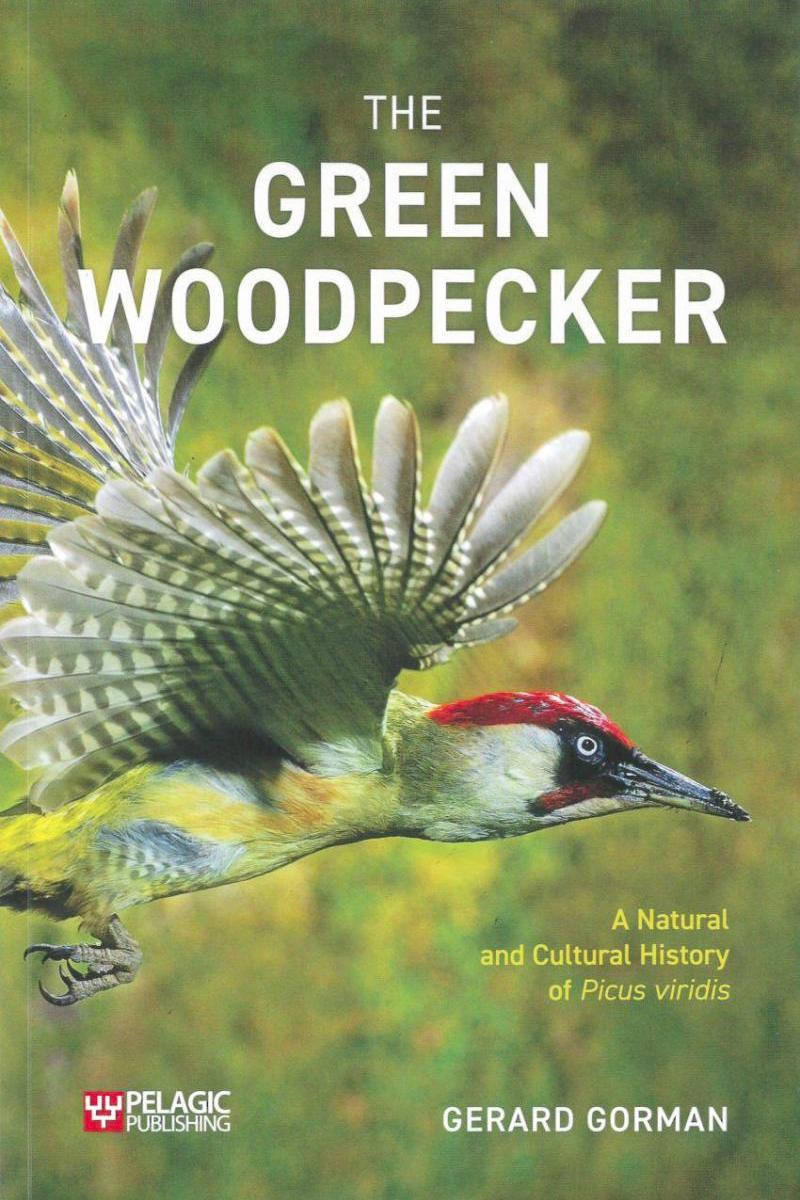
Gorman, G. (2023)

The Green Woodpecker: The Natural and Cultural History of Picus viridis.

Exeter: Pelagic Publishing (Pelagic Monographs).
 
Accéder au catalogue
 
"This book describes the natural and cultural history of an iconic and unusual woodpecker – a species that nests in tree cavities but which forages mostly on the ground. The Green Woodpecker, known in folk English as the Yaffle, is afforded comprehensive coverage in this work, with information on its origins, taxonomy, anatomy, appearance, moult, calls, distribution, conservation status, habitats, movements, breeding, diet and relationships with other wildlife and humans all presented.

The text is richly illustrated throughout with quality photographs as well as sound spectrograms. Many eye-opening observations of Green Woodpecker behaviour are detailed. This all-encompassing and engaging account has been written for a wide audience, whether professional ornithologist, citizen scientist, amateur birder, woodpecker aficionado and simply someone who wishes to learn more about this curious and remarkable bird."

Rosenmay Jacobsen, K. (2025)

The Laboratory Pig.

3rd ed. Milton: Taylor & Francis Group (Laboratory Animal Pocket Reference Series).
 
Accéder au catalogue
 
"Since the popular second edition of The Laboratory Swine was published more than a decade ago, the number of pigs used in toxicity studies has increased as an alternative to commonly used non-rodent species, while, at the same time, large developments have been made in welfare concepts of laboratory animals. Pigs have gained prominence in both basic and applied research, leading to a significant increase in publication activity.

This third edition summarizes these new insights, raising the bar for humane care and use of pigs, from agricultural sources to genetically and microbiological defined minipigs. Aimed at animal caretakers, technicians, laboratory animal veterinarians, and investigators planning and performing studies on pigs, it provides an overview with extensive references for further study. The book has been updated with a special focus on refined methods for housing and handling pigs, including an updated description of commonly performed experimental and surgical procedures.

Continuing its legacy as the premier reference on the care and use of pigs in the laboratory, the small, practical, and accessible format makes this an easy "go-to" book, with easy-to-find information and high-quality color images. The third edition aims to contribute to humane use and care for laboratory pigs in all aspects of housing, husbandry, veterinary care, and experimental techniques."

Livingstone, M. (2025)

Exotics Made Easy: Demystifying Rabbits and Small Mammals.

1st ed. Essex: 5m Publishing Ltd.


Accéder au catalogue


"A textbook for vets, demystifying the body systems and requirements of exotic pets. Exotics Made Easy guides practitioners through history taking, the clinical exam and identifying common conditions, and discusses the human–animal bond, the cascade system and informed consent.

Rabbits, guinea pigs, rats, hamsters, Mongolian gerbils, chinchilla, degu, African pygmy hedgehogs and ferrets are each covered in a dedicated chapter providing species-specific anatomy, current husbandry advice, transport advice, sexing, diagnosis and treatment of common conditions, blood sampling (where, how much and results), hospitalisation requirements, intubation and common surgeries."