

Soutenance publique de thèse doctorale : Matthias AUSLOOS
ther | Louvain-la-Neuve
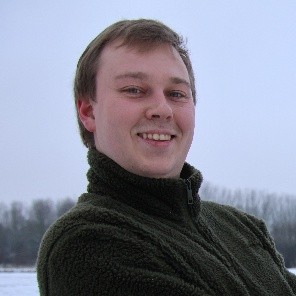 Monsieur Matthias AUSLOOS, présentera, dans le cadre de sa cotutelle avec la KU Leuven, sa dissertation doctorale pour l’obtention du grade de doctorat en théologie et la soutiendra publiquement le vendredi 11 septembre à 16h dans l’auditoire MDL 01, Voie du Roman Pays,3A à Louvain-la-Neuve.
Le jury interuniversitaire est composé de MM. les professeur·es
- Vincent Legrand, président
- Mehdi Azaiez, promoteur (UCLouvain)
- Jan De Volder, promoteur et secrétaire (KU Leuven)
- Carool Kersten, correcteur extérieur (KU Leuven)
- Laura Vansina, correctrice extérieure (VUB)
Religion and the Clash of Civilizational Discourses: Emerging Political Discourses on Religion and Civilization in the Post-9/11 Decade across the Russian Federation, the United States of America and the Republic of Türkiye.
This dissertation examines the emergence and evolution of a religious-civilizational discourse in world politics during the post-9/11-decade. While existing scholarship situates a civilizational turn only in the second decade of the 21st century, this study demonstrates that its foundations were already laid in the immediate post-9/11-period through a traceable incubation process. Using comparative qualitative discourse analysis within a Grounded Theory Method and conceptually anchored in Samuel Huntington’s Clash of Civilizations thesis, the research analyses an extensive corpus of speeches by the heads of state of Russia, the United States, and Turkey.
This analysis reveals a temporary convergence immediately after 9/11, in which all three countries rejected Huntington’s thesis and concepts in favor of a dualistic discourse of a single global and universal civilization against barbaric terrorism. From the beginning, but with the 2003 US invasion of Iraq as a first breaking point, non-Western leaders increasingly perceived Western universalism as hypocritical value-imperialism, opening space for counter-narratives. From 2007 onwards, Russia and Turkey broke decisively with the Western unipolar order and actively instrumentalized Huntingtonian concepts to construct autonomous civilizational identities.
Religion simultaneously underwent a functional transformation in the non-Western cases, shifting from a privatized phenomenon to the constitutive core and defensive shield of civilizational identities. In American rhetoric, by contrast, religion remained embedded in the frameworks of American Civil Religion to build a domestic political persona and of American Exceptionalism to universalize Western liberal and democratic values. Across all cases, religion served both domestic legitimation and foreign policy purposes.
The study proposes an original theoretical model consisting of two structural factors—historical identity fault lines and a religious-civilizational intellectual reservoir—and four active catalysts: external geopolitical events, electoral or institutional power consolidation, emotional mobilization based on perceived injustice, and the entrepreneurial agency of political leaders. The dissertation concludes that the presence of all these factors and catalysts in the Turkish and Russian cases, alongside the absence of some in the American case, explains the sub-evolutions and the macro-shift toward religious-civilizational thinking in the discourses during the studied period of 2001–2011.
Si vous souhaitez assister à la soutenance, nous vous invitons à vous inscrire via ce formulaire.