Research
elia |
ELIA
ELIA



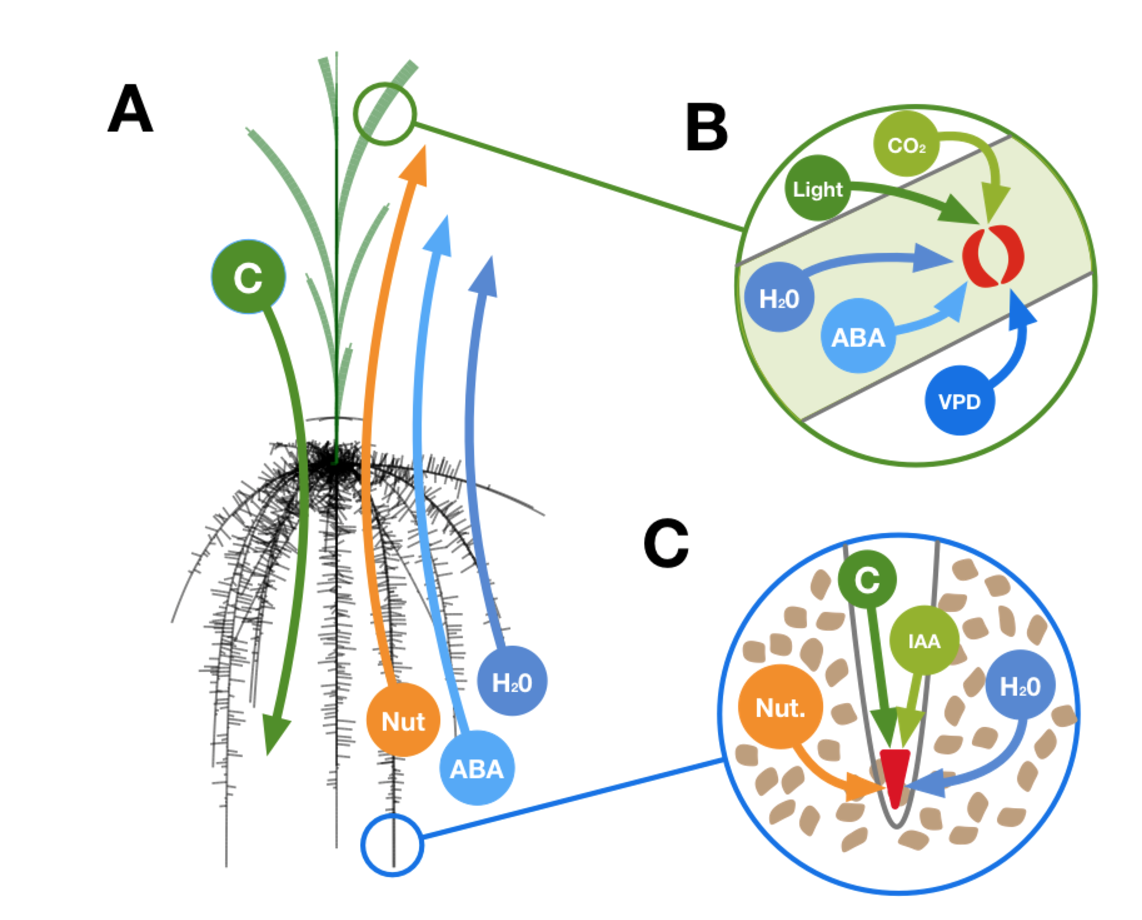
Research in plant physiology and ecophysiology at ELIA aims to understand how plants grow and adapt to their environment, particularly to abiotic factors. We work at multiple scales, from individual plants to field level, with a special focus on cultivated species. By studying different plant organs, we examine their ability to use water and nutrients for growth and their responses to stresses such as drought, heat, salinity, and other mineral constraints. Our goal is to deepen this understanding to support the development of more sustainable agricultural practices.
Our Professors
Valentin Couvreur
ELIA’s research on plant reproduction and genetics spans a broad spectrum, from studying the genetic, hormonal, and environmental mechanisms that regulate flowering and floral development to analyzing the ecological interactions between plants and pollinators. We work on cultivated species to improve yields and strengthen the resilience of agricultural systems, as well as on wild species—both rare and endangered and invasive exotics—to enhance ecosystem management. The impact of climate change on plant reproduction and plant–pollinator relationships is a central focus of our research.
Our Professors
Anne-Laure Jacquemart
Research in Agricultural Economics and Food Systems at ELIA examines the functioning and performance of agrifood systems, and the challenges and opportunities for their transformation.
On the one hand, agrifood systems are examined through the lens of agricultural and food economics to analyse how policies, markets, technologies, and institutions influence production decisions, value chain organization, trade, consumption patterns, and sustainability outcomes.
On the other hand, multidimensional, interdisciplinary, and participatory approaches are mobilised to characterize the diversity of production systems, unravel the organisation of food value chains, and envision transition pathways for agrifood systems at multiple scales.
A central objective is to contribute to the transition toward more sustainable agrifood systems by producing rigorous scientific knowledge addressing economic viability, environmental resilience, social inclusion, and nutritional outcomes.
Methodologically, this research combines quantitative and qualitative approaches, using survey data, experimental methods, econometric analysis, value chain analysis, quantitative modelling, impact evaluations, barrier and lever analysis, semi-structured interviews and focus groups, and is embedded in inter- and transdisciplinarity. Empirical work spans both the Global North (with a focus on Belgium and Europe) and the Global South (particularly African countries), allowing for comparative and context-specific insights.
This thematic area is led by the Sytra team (Prof. Philippe Baret) and the Agrifood Economics Group (Prof. Goedele Van den Broeck), together with Prof. Frédéric Gaspart, whose research contributes to academic debates and policy discussions on sustainable food systems, development, and inclusive growth.
For more information, please visit: ·
Our Professors
Richard Lambert