

Walking
transit |
Walking: a healthy choice !

Check how far you live from your campus. Find out using this distance calculator.
What if changing your route could be a great way to relax, get some exercise, have fun, meet people or even embark on an adventure?

LOUVAIN-LA-NEUVE: a pedestrian-friendly city
“In terms of urban planning, it is an exceptional city.”
Louvain-la-Neuve’s urban planning is based on a Master Plan drawn up in 1970, which defines the city’s structure and the range of urban functions and facilities to be provided. This plan is guided by fundamental urban planning principles that have played a decisive role in promoting sustainable development. Two complementary principles are particularly important:
Louvain-la-Neuve aims to be a city designed on a human scale and is a city designed for pedestrians.
The human scale is central to the city’s design: people are the main point of reference. Everything is designed to make them feel comfortable in the urban environment, from the visual experience to the layout of buildings and the quality of the surroundings. Streets, squares and buildings are designed with people in mind: there are no imposing buildings or excessively large spaces.
As Professor Lemaire puts it: “Urban planning has no justification in itself; its only purpose is the services it provides to people.”
Designed for pedestrians: the city extends no more than 1,100 metres from its centre, meaning that it can be crossed on foot in 10 to 15 minutes. The urban centre is built on a 14-hectare deck covering the roads used by motor vehicles and the railway, as well as two or three levels of car parks. This layout allows people to move around safely.
The city is made up of several neighbourhoods, each with a small square and a few local shops. These neighbourhoods are connected to the centre by direct, clearly signposted pedestrian routes.
These routes form the city’s primary pedestrian network. They never cross roads used by motor vehicles at the same level and, wherever possible, are complemented by covered walkways. Key facilities and activities are preferably located close to this main network. Car use is discouraged: access to the city centre is limited to the roads leading into the city, with no through traffic, or by rail.
These original choices — designing the city on a human scale and prioritising walking — have also encouraged active and sustainable mobility, informal social encounters, energy savings and more efficient use of space, while helping to create a lively urban environment both in the centre and in the neighbourhoods.
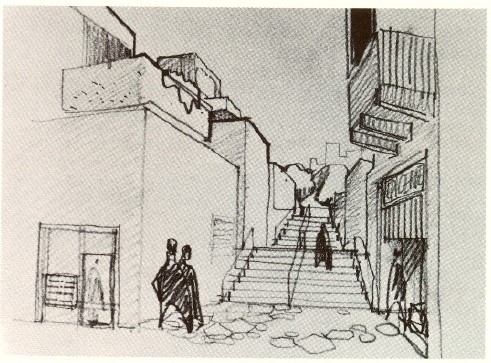

WOLUWE CAMPUS (Alma)
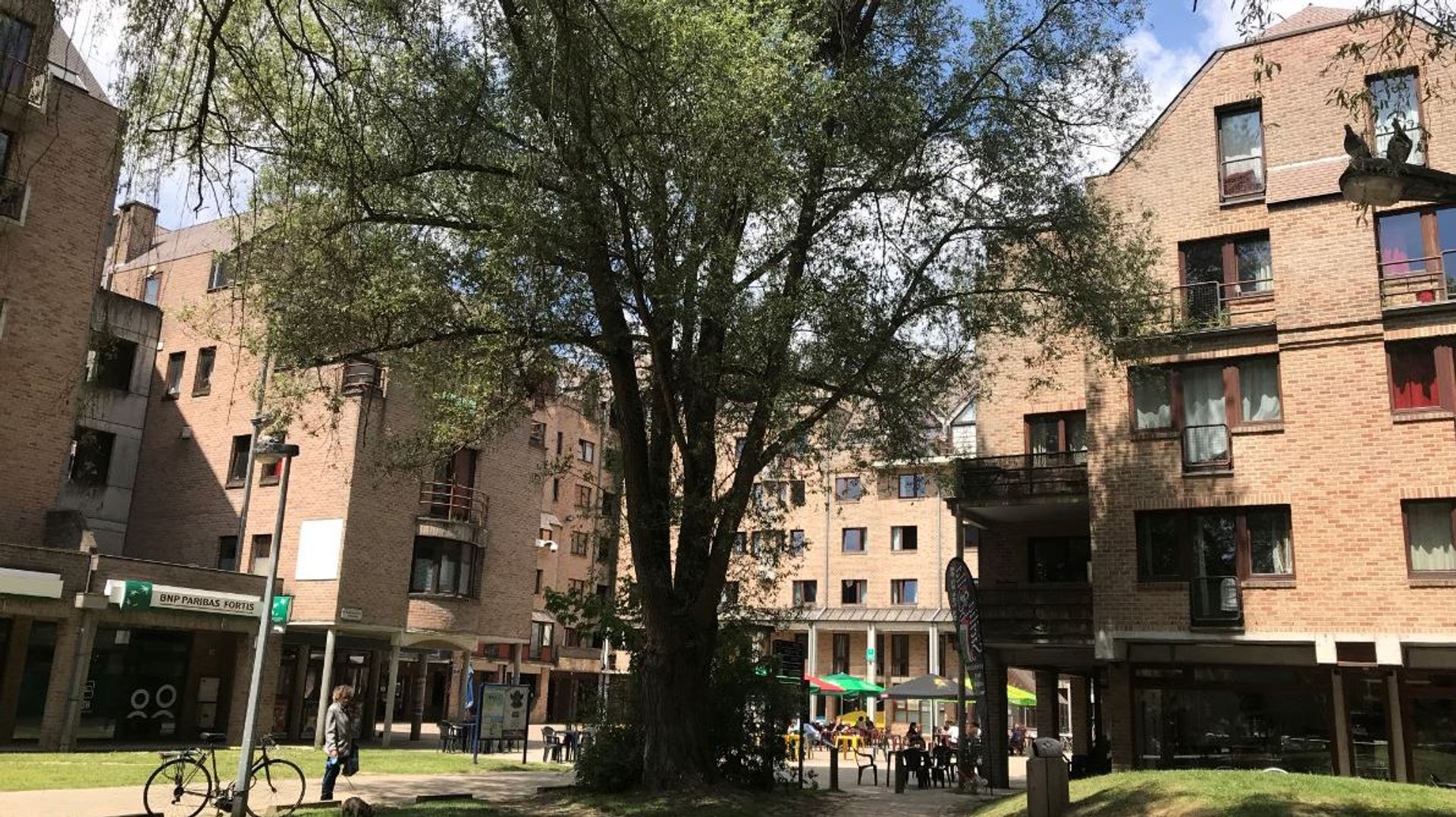
Like Louvain-la-Neuve, a new town developed in the 1970s, the Woluwe site follows an urban planning model that prioritises pedestrians. The campus is centred around Place de l’Alma.