Public Thesis Defense of Bianca FELICORI
lab | Louvain-la-Neuve, Bruxelles Saint-Gilles, Tournai

Artistic processes for the foundation of a “new architecture”, 1951-69
Wednesday, 6 May 2026 – 5:30 PM
UCLouvain – Faculty of Architecture, Architectural Engineering and Urban Planning, Brussels Campus Meeting Room AV-02 47/51 Rue Wafelaerts 1060 Brussels
The dissertation reconstructs the origins of the “new architecture” that takes shape between 1951 and 1969, a period in which the post-war generation of architects in Europe and the United States seeks to refound the discipline through artistic processes. Emerging against the backdrop of a political, social, and cultural crisis, this generation identifies in architecture a field of experimentation capable of absorbing impulses from a particular form of art that draws on mass culture, new technologies, and the transformed rhythms of everyday life. The study retraces the genealogy of this shift through two decisive experiences: the founding of Archigram in United Kingdom (1961) and that of Superstudio in Italy (1966). Although situated in different contexts, both articulate a refoundation of architecture through the “inter-arts”, understood as the integration of artistic concepts, technological languages, and mass-media imagery. In London, this direction leads to the foundation of Archigram, a publication that operates as an experimental laboratory on paper; in Florence, it gives rise to Superstudio, whose work — beginning with Superarchitettura exhibition — asserts a collective authorship and expands architecture into a conceptual field.
Tracing this genealogy requires extending the analysis back to 1945, when culture, art, and architecture become political instruments in the reconstruction of the United Kingdom and Italy. The Festival of Britain (1951) crystallises a new cultural climate in United Kingdom, while in Italy the Communist Party’s promotion of “figuration” shapes the artistic debate.
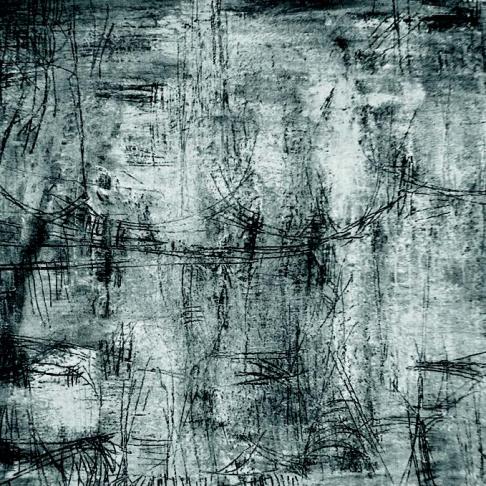
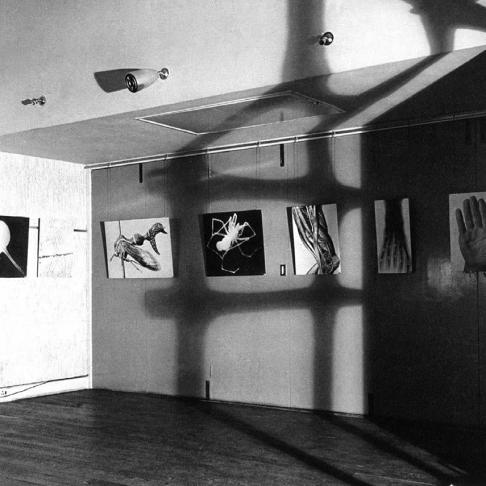
Within these frameworks, the dissertation examines the formative years, early projects, and initial references of the figures who constitute the original core of both Archigram and Superstudio: Peter Cook, David Greene, and Michael Webb — the authors of the first issue of Archigram — as well as Adolfo Natalini, founder of Superstudio, who in the years preceding the group’s formation had been actively engaged in artistic practice. For Cook, Greene, and Webb, the Independent Group plays a central role through exhibitions such as Growth and Form (1951), Parallel of Life and Art (1953), and This Is Tomorrow (1956), which introduce the notion of “inter-arts” by bringing together technology, mechanisation, and mass-media imagery. These concepts underpin the first four issues of Archigram (1961–64) and inform the emergence of a “new generation” that conceives architecture as a consumable product, embraces “expendability”, and reaches its most complete formulation in Cook’s Plug-in City (1964). For Superstudio, extensive research in Natalini’s private archives and a series of interviews make it possible to reconstruct his artistic activity between 1954 and 1965. Through painting, exhibitions, travels between Florence and London, and encounters with the works of Lucio Fontana, Alberto Burri, Eduardo Paolozzi, Robert Rauschenberg, and Gruppo 70, among the others, Natalini develops a conception of the work as “habitable” art (Natalini, 1963), the title of a painting from 1963 that precedes the exhibition Arte abitabile by Michelangelo Pistoletto, Piero Gilardi and Gianni Piacentino (Galleria Sperone, Turin, 1966). This notion, which extends the limits of the canvas and opens up new possibilities for architecture, emerges in his early works and student projects (1962–1966) before converging in the first projects of Superstudio (1966–1969). The “Monumento Continuo” represents the culmination of this trajectory — a sequence of photomontages that transforms architecture into a form of “Land Art” and situates the group within an expanded “interartisticity”.
“Inter-arts” and “interartisticity” become crucial to the dissertation in articulating this new relationship between art and architecture — one that exceeds Le Corbusier’s “synthesis of the arts” and Gio Ponti’s triad of architecture, painting, and sculpture. A conceptual field, later described by Natalini as a “no man’s land”, becomes the shared ground on which the so-called Archigram group and Superstudio lay the foundations of a “new architecture” derived from artistic processes. Over time, this “no man’s land” expands into an inter-landscape, revealing the extent to which the artistic foundations of their work reshape the expressive possibilities of the discipline.
Membres du Jury
Prof. Beatrice Lampariello (UCLouvain), Supervisor
Prof. Gérald Ledent (UCLouvain), Supervisor et Secretary
Prof. Sergio Altomonte (UCLouvain), President
Prof. Lara Conte (Università Roma Tre, Italy)
Prof. Anna Rosellini (UniBo, Italy – Paris-Est, France)
Prof. Javier Fernandez Contreras (HEAD – Genève, Switzerland)
Pay attention : the public defense of Bianca Felicori will also take place in the form of a videoconference
Illustrations
Illustrations