

Job opportunities
libst | Louvain-la-Neuve
PhD position (4 years) in Developmental Neurobiology in Françoise Gofflot's lab (AMCB):
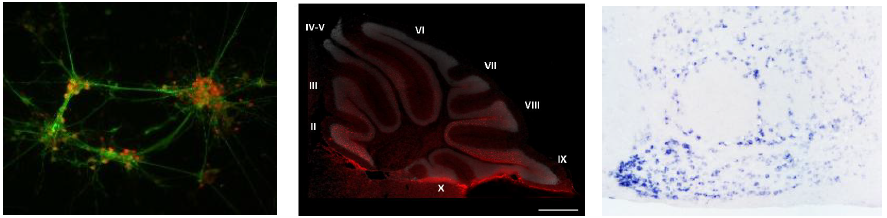
Emerging evidence suggests that HOX proteins, beyond their established roles in early central nervous system development, may also contribute to later processes such as synapse formation and plasticity, and acquisition of terminal neuronal identity.
To further investigate these functions, we focused on HOXA5 and its role in synaptogenesis and neuronal circuit connectivity, using both in vitro and in vivo approaches. To fully apprehend HOXA5 activity in CNS late development, we also address questions
regarding its regulation, mode of action, stability and its molecular interactions in neuronacells.
HOXA5, a member of the HOX family of transcription factors, is a master regulator of morphogenesis and cell differentiation in a broad spectrum of tissues and organs. Our team demonstrated that the HOXA5 protein is functional in the hindbrain during the first postnatal weeks, where it participates in maturation of neuronal circuits after birth (Lizen et al., 2017a; Lizen et al., 2017b). Our data also highlighted points of convergence between HOXA5 and neurodevelopmental disorders such as autism spectrum disorders. A comprehensive behavioral analysis of a postnatal Hoxa5 loss-of-function mouse model indicates that postnatal Hoxa5 deficiency selectively enhances stereotyped behaviors without broadly affecting motor or social functions (Glibert et al., in review).
In this context, we propose in this project to investigate HOXA5’s role in synaptogenesis in vitro using a neuronal model based on microfluidic devices (assessing morphological, molecular, and functional synapse dynamics) and in vivo using a novel Hoxa5::TdTomato reporter line combined with an inducible conditional knockout mouse to map precerebellar projections in presence and absence of Hoxa5. Comparative RNA-Seq approaches will allow to dissect HOXA5-regulated molecular networks at different stages of synaptogenesis.
We are looking for a highly motivated biologist to contribute to this project. The selected candidate will be encouraged to apply for external fundings, although we may be able to provide one year funded position to start a PhD. Previous experience in molecular and cellular biology, handling of mice, and a background in developmental biology will be an advantage.
Interested candidates should send a CV and contact information for two referees to Pr Françoise Gofflot (francoise.gofflot@uclouvain.be).