

From doctoral research to international academia: the journey of Chiara Zanardello
ires |
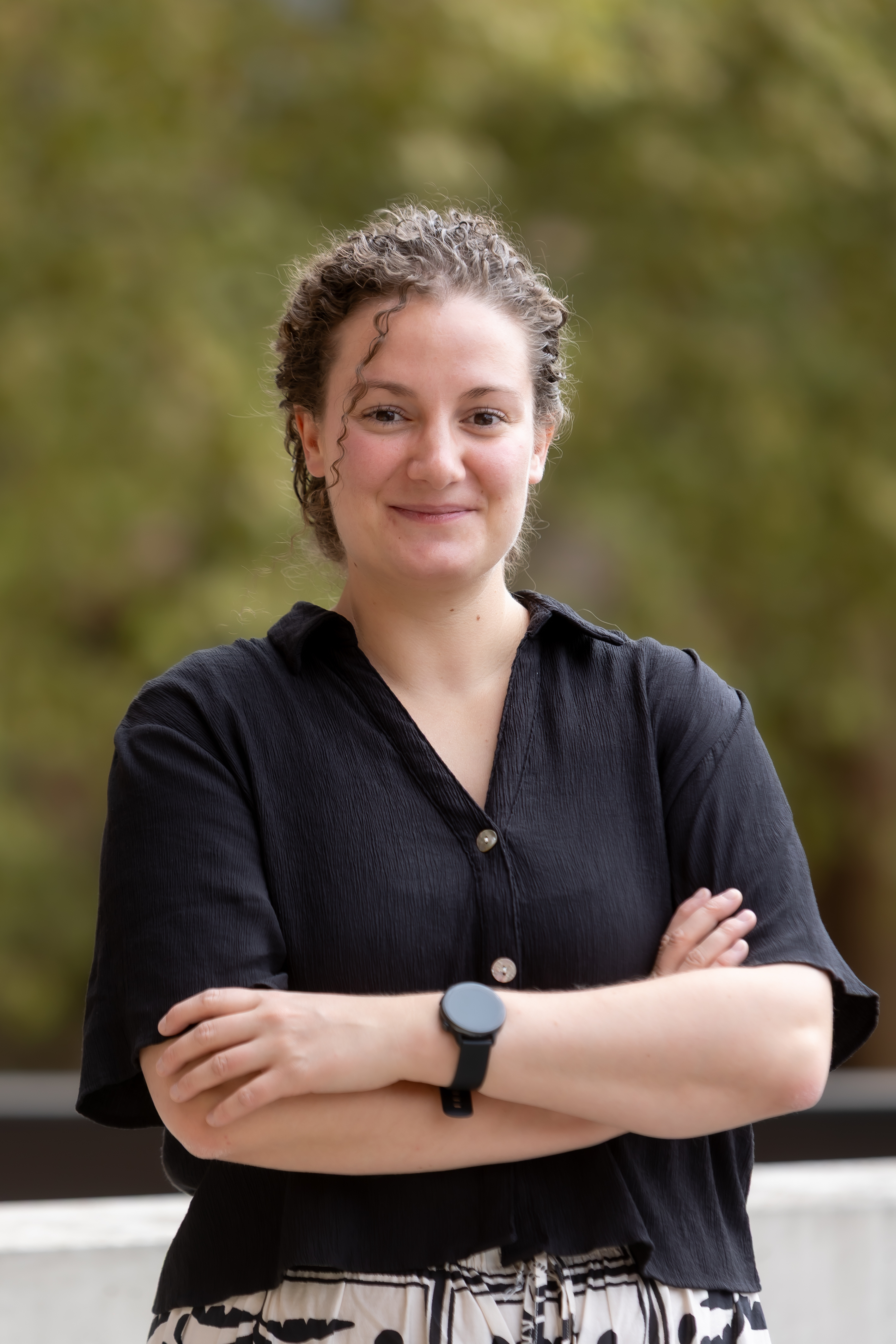
Trained in economics between Italy and Belgium and specialized in economic history, Chiara Zanardello completed her PhD at LIDAM UCLouvain and is now a Postdoctoral Research Fellow at the Institute for Advanced Study in Toulouse at Toulouse School of Economics. She looks back on her doctoral journey, the challenges of academic research, and what future PhD candidates should know before getting started.
Chiara Zanardello’s path to academic research began with a simple instinct: to look beneath the surface of economic facts and ask deeper questions. Today she works in an international and interdisciplinary research environment in Toulouse. Her trajectory offers a concrete example for future PhD candidates and members of LIDAM who are considering or beginning a doctoral journey.
What first motivated you to pursue a PhD, and why at LIDAM UCLouvain?
I have been drawn to research since my undergraduate studies in Economics and Commerce at the University of Verona. I enjoyed going beyond what we learned in class and asking why things happen, exploring data and history, and developing deep expertise in a topic.
A key turning point was my Erasmus stay at the University of Latvia in Riga, where I became fascinated by economic history. I wrote my undergraduate thesis on Latvia’s transition from a closed to an open economy. Later, during my joint Master’s degree between the University of Milan and UCLouvain, I wrote my thesis with David de la Croix on economic history and human capital. That experience confirmed that I wanted to continue in research. When I saw a PhD position at LIDAM UCLouvain aligned with these interests, it felt like a natural next step.
How would you describe your PhD years overall?
They were intense and rewarding, with the usual mix of highs and lows that comes with research. One of my main lessons is how important the relationship with your supervisor and your research environment is. Clear communication, early alignment on expectations, and a strong support network make a real difference.
“Your supervisor and research environment make a real difference.”
I benefited a lot from being in a setting where I could discuss ideas regularly, receive feedback, and share progress with colleagues. Having both independence and a research community helped me grow as a scholar and as a person.
What was the most challenging phase of your doctorate?
The academic hiring market year was definitely the most demanding period, both intellectually and emotionally. It requires structure, resilience, and perspective. What helped me most was seeking feedback from several mentors, treating rejection as part of the process, and staying connected with friends and family.
You also spent time abroad during your PhD. What did that bring to your work?
During my doctorate I spent six months as a visiting researcher at Northwestern University with Joel Mokyr. It was a very valuable experience. Beyond being exposed to another research culture, it pushed me to step outside my usual academic environment and confront different ways of thinking about similar questions. It expanded my network and challenged some of my assumptions, which ultimately helped me refine my projects. It also helped me refine my projects and gain confidence in presenting my work internationally.
“My visiting at Northwestern showed me that research grows when you step outside your intellectual comfort zone.”
What I learned most from that experience is how important it is not to remain intellectually “comfortable.” Seeking feedback outside your immediate academic circle broadens your perspective and enriches the way you approach research questions.
How did your transition to your current position in Toulouse happen?
The transition was very smooth. The Institute for Advanced Study in Toulouse and Toulouse School of Economics have a strong onboarding process for new research fellows. There is practical support for administrative steps such as housing, banking, and phone services, which makes settling in much easier.
Integration into the academic community is also well organized, with welcome events and early opportunities to present your work. That makes it easier to quickly feel part of the institute.
From a research perspective, the transition has also marked a new phase. As a postdoc, I am gradually shifting from completing and publishing my PhD projects to developing new collaborations and research ideas. Finding the right balance between consolidating previous work and investing in new directions is part of this career stage, and it is both challenging and exciting.
What does your current role look like in practice?
My role as a Postdoctoral Research Fellow is mainly focused on research and gives me a lot of autonomy. I define my research agenda, work on papers, present in seminars and conferences, and develop collaborations.
“My postdoc gives me the autonomy to define my own research agenda.”
The environment is highly interdisciplinary, which constantly exposes me to different perspectives and research approaches. I interact with economists, political scientists, psychologists, biologists, and anthropologists. I am currently finalizing work from my PhD while also starting new projects. For example, I am preparing a research grant proposal with two evolutionary biologists, which has been a refreshing way to approach new questions and methods.
In what ways does your PhD training still support your daily work?
My PhD gave me a solid research toolkit. I learned how to formulate a clear research question, design a credible identification strategy, work carefully with data, and communicate results effectively.
“A PhD teaches you how to turn big questions into manageable steps.”
Just as important, it trained me to manage long term projects. I learned how to break big questions into smaller steps, deal with uncertainty, and stay motivated even when progress is slow. These skills are essential in my current work.
What advice would you give to someone hesitating about starting a PhD?
Talk to people and gather information early. If possible, speak with current PhD candidates and recent graduates to understand daily life in the department, the supervision style, expectations, workload, and research culture.
Try to choose a topic you genuinely enjoy thinking about, because motivation matters over the long run. If you are unsure, compare different departments and environments. You cannot remove all uncertainty, but you can make a much more informed decision.
Looking back, would you choose to do a PhD again?
Yes, I would. The PhD shaped me as a researcher and also helped me grow personally. It taught me independence, perseverance, and confidence in my work. It also led me to an excellent research environment and to professional relationships that I value a lot.
Chiara Zanardello studied economics in Verona and developed an interest in economic history during an Erasmus stay in Riga. She completed a joint Master’s degree between the University of Milan and UCLouvain, where she wrote her thesis with David de la Croix. She earned her PhD at IRES LIDAM UCLouvain and was a visiting researcher at Northwestern University. She is currently a Postdoctoral Research Fellow at the Institute for Advanced Study in Toulouse at Toulouse School of Economics, Université Toulouse Capitole.