

Yet Another Pact: Migration Governance Through the Mediterranean Pact
cedie | Louvain-la-Neuve
Blogpost
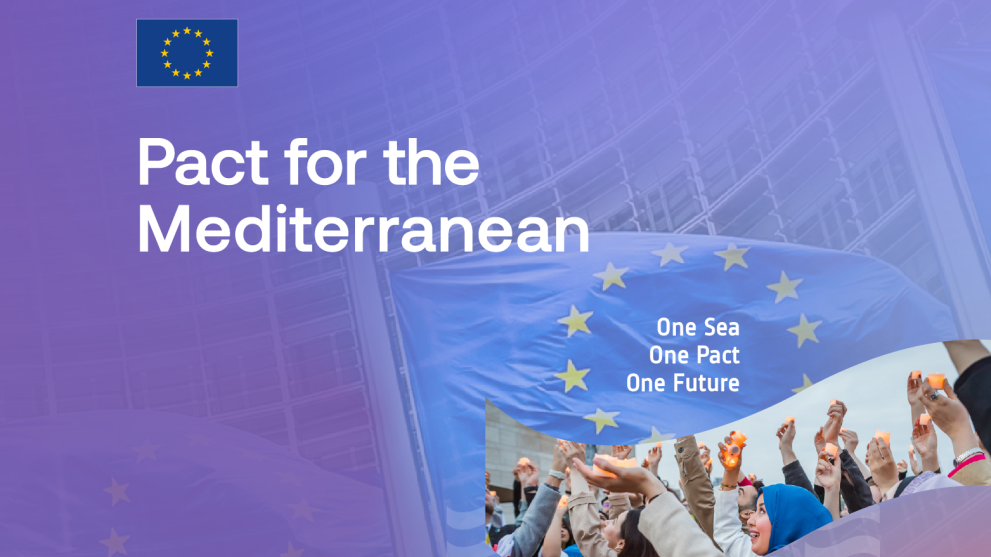
Pact for the Mediterranean – Migration – Cooperation – Partner Countries – European Union.
The European Commission’s Action Plan, presented in spring 2026, paves the way for implementing the Mediterranean Pact. In the field of migration, it aims to strengthen regional cooperation in the fight against irregular migration, migrant smuggling and human trafficking, whilst establishing legal migration routes.
Lisa Di Giacomo
As these lines Nare being written, June 12, 2026, the day on which the Pact on Migration and Asylum enters into application. Yet, have you heard of the Pact for the Mediterranean One Sea, One Pact, One Future (hereinafter: the Pact)?
The Pact was adopted in the autumn of 2025. It is a renewed framework for cooperation across the Mediterranean that brings together the European Union (EU), its Member States, and ten partner countries.[i] It aims to enhance and facilitate cooperation among actors across the Mediterranean about people, economic integration, and security and migration management. In April 2026, the European Commission adopted an Action Plan that serves as a practical and “living” document for implementing the Pact. It details a wide range of initiatives, funding mechanisms, and timelines and is explicitly aligned with the EU’s European Asylum and Migration Management Strategy (2026–2031). The Strategy broadly aims to prevent illegal migration, protect people, and encourage talent through, among other things, migration diplomacy. The Action Plan emphasises two objectives: a controlling logic, reducing irregular arrivals, strengthening borders, and fighting smuggling, and a partnering logic, promoting mobility, supporting development, and ensuring people on the move’s rights. The overall approach of the Action Plan to migration is security-driven, with a weaker emphasis on extending legal mobility or protecting migrants’ rights.
It is the Action Plan’s third pillar that addresses migration-related aspects in greater detail, encompassing nine initiatives over twenty-one. The focus is on security, preparedness, and migration management. Priority is given to areas such as preventing irregular migration, strengthening border management capacities, and combating migrant smuggling and trafficking networks.
The concrete measures implemented reflect these priorities: support for border surveillance systems, strengthened cooperation with agencies such as Frontex, Europol and Interpol, and targeted interventions as part of initiatives such as the Global Alliance against Migrant Smuggling. The focus is therefore on managing migration flows before they reach the EU, often by strengthening the operational capacities of partner countries in North Africa and the Middle East.
Meanwhile, the Action Plan seeks to incorporate a more cooperative dimension through initiatives such as talent partnerships, skills development programmes, and pilot projects that facilitate legal mobility. These measures aim to open pathways to European labour markets for certain target groups, in particular skilled workers, while also addressing labour shortages within the EU.
In practice, these two approaches are not given equal weight. Whilst initiatives relating to legal migration do exist, they remain relatively limited and often limited to skilled workers.[ii] By contrast, measures relating to border control and the prevention of migration are more comprehensive and better funded.[iii] This imbalance raises a few concerns. Firstly, the emphasis on externalising migration control risks shifting responsibilities to partner countries without sufficiently addressing/ignoring the structural drivers of migration, including economic inequality, armed conflict, and climate change. Secondly, although the Action Plan refers to respect for fundamental rights, it provides little detail on how these will be guaranteed in practice, particularly in contexts where governance and human rights protection are fragile.
Overall, although the Action Plan represents an effort to implement EU-Mediterranean cooperation on migration, it appears to reflect the EU’s internal priorities primarily, notably the management and reduction of migration flow. It is inscribed in the continuity of the Pact of Migration and Asylum, notably by strengthening cooperation with third countries. Consequently, the Pact and its Action Plan follow on from the Union’s current migration and asylum practices. The Action Plan risks prioritising short-term control at the expense of long-term, sustainable and rights-based migration governance in the region.[iv]
Sources:
- European Commission, Pact on Migration and Asylum, May 2024.
- European Commission, The Pact for the Mediterranean One Sea, One Pact, One Future - Joint Communication to the European Parliament, the Council, the European Economic and Social Committee and the Committee of the Regions JOIN(2025) 26 Final, October 2025.
- European Commission, European Asylum and Migration Management Strategy - Communication from the Commission to the European Parliament and the Council COM(2026) 45 Final, January 2026.
- European Commission, Pact for the Mediterranean Action Plan, April 2026.
- Lavenex, S., “Multilevelling EU external governance: The role of international organizations in the diffusion of EU migration policies”, Journal of Ethnic and Migration Studies, 42(4), 2016, 554–570.
- Martins, B. O. and Jumbert, M. G., “EU Border technologies and the co-production of security ‘problems’ and ‘solutions’”, Journal of Ethnic and Migration Studies, 48(6), 2022, 1430–1447.
To cite this note: L. Di Giacomo, “Yet Another Pact: Migration Governance Through the Mediterranean Pact”, Cahiers de l’EDEM, June 2026.
[i] Algeria, Egypt, Israel, Jordan, Lebanon, Libya, Morocco, Palestine, Syria and Tunisia.
[ii] Regional programme on legal migration - THAMM+ (Towards a Holistic Approach to Migration and Mobility, EUR 75 million. For IT: “Promotion of Legal Channels of Entry into Italy. Pre-departure measures and job placement for third-country nationals” (AMIF) and “Global Skills Partnership” (with the support of the World Bank). There is also the international dimension of the Erasmus+ programme, with EUR 15.2 million allocated for 2026, but it focuses mainly on the Capacity Building in Higher Education, leaving few details on the legal migration aspect.
[iii] See pp. 36–37 on the Secure borders part, the list of regional and bilateral EU-funded actions in southern Mediterranean partners, which represents a cumulated EUR 480 million of funds.
[iv] S. Lavenex, “Multilevelling EU external governance: the role of international organizations in the diffusion of EU migration policies”, Journal of Ethnic and Migration Studies, 42(4), 2016, 554–570; B. O. Martins and M. G. Jumbert, “EU Border technologies and the co-production of security ‘problems’ and ‘solutions’”, Journal of Ethnic and Migration Studies, 48(6), 2022, 1430–1447.