

LOCO lab – Neuromechanics of human movement and locomotion
ions | Bruxelles Woluwe, Louvain-la-Neuve
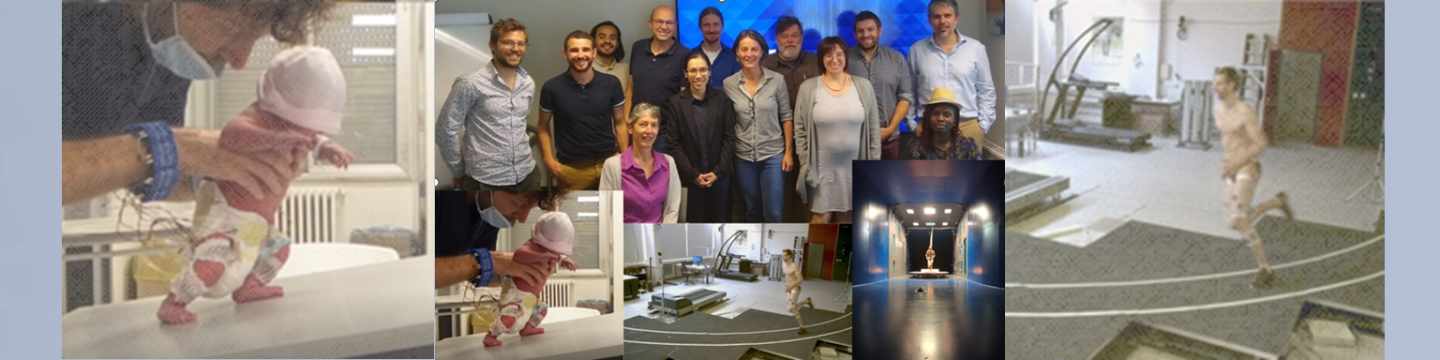
The LOCO group explores the neuromechanics of movement, particularly human locomotion, posture, and task-specific movements such as jumping or landing. Our research is dedicated to understanding the development and adaptability of human movement. We investigate how sensorimotor control evolves from innate motor patterns toward learned and optimized behaviors, and how this trajectory is shaped by experience, training, injury, or neurological conditions.
Our work spans the full motor continuum — from spontaneous movements in neonates to the biomechanical and neural strategies used by skilled athletes. We combine approaches from biomechanics, motor control, and neurophysiology to study the motor learning and plasticity, multisensory integration for the generation of movements, interlimb coordination, muscle synergies, and locomotor rhythmicity in both typical and atypical development (e.g., cerebral palsy, LCA injury). In addition to our human studies, we also conduct comparative analyses across species, that allow us to explore evolutionary convergences and conserved motor strategies, shedding light on the biological foundations of robust and adaptable locomotion.
A core part of our work involves quantifying patterned control of movement, movement variability, and adaptive responses to novel constraints — such as unstable environments, altered sensory feedback, or fatigue. We use advanced experimental techniques including surface EMG, 3D motion capture, and force plate analysis to characterize the neuromechanical signatures of motor behavior.
Publications Bénédicte Schepens
Publications Dominique De Jaeger
-
-
Chapitre de livreSenden, M., De Jaeger, D., Tijs Rotsaert, Leroy, F., & Coertjens, L. (2023). How to Make Students Feel Safe and Confident? Designing an Online Training Targeting the Social Nature of Peer Feedback. In Omid Noroozi & Bram de Wever (ed.), The Power of Peer Learning. Springer International Publishing. https://doi.org/10.1007/978-3-031-29411-2
-
-
-
Papier de conférence
-
Article de journalDjivoh, Y. S., Kpadonou, T., Puttemans, T., & De Jaeger, D. (2022). Diastasis recti in the Beninese population: Cross-sectional study from normal values to diagnosis. South African Journal of Physiotherapy, 78(1), 1776 [1-9]. https://doi.org/10.4102/sajp.v78i1.1776 (Original work published 2022)
-
-
-
Papier de conférence
-
-
-
Article de journalScohier, M., De Jaeger, D., & Schepens, B. (2014). Triceps surae stretch reflex modulation after a mechanically evoked ankle dorsiflexion during the swing phase of human running. Motor Control. Published. https://doi.org/10.1123/mc.2013-0039 (Original work published 2014)
-
-
-
Papier de conférence
-
-
-
Papier de conférence
-
-
-
-
Article de journalProteau, L., Tremblay, L., & De Jaeger, D. (1998). Practice does not diminish the role of visual information in on-line control of a precision walking task: Support for the specificity of practice hypothesis. Journal of Motor Behavior, 30(2), 143-150. https://doi.org/10.1080/00222899809601331 (Original work published 1998)
-
Publications Guillaume Bastien
-
-
Article de journalDewolf, A., Meurisse, G., Ivanenko, Y., Lacquaniti, F., Bastien, G., & Schepens, B. (2022). Relation between Step-To-Step Transition Strategies and Walking Pattern in Older Adults. Applied Sciences, 12(10), 5055 [1-11]. https://doi.org/10.3390/app12105055 (Original work published 2022)
-
-
-
Article de journalMeurisse, G., Dierick, F., Schepens, B., & Bastien, G. (2016). Determination of the vertical ground reaction forces acting upon individual limbs during healthy and clinical gait. Gait & Posture, 43, 245-250. https://doi.org/10.1016/j.gaitpost.2015.10.005 (Original work published 2016)
-
Bastien, G., Willems, P., Schepens, B., & Heglund, N. (2016). The mechanics of head-supported load carriage by Nepalese porters. The Journal of Experimental Biology, 219(22), 3626-3634. https://doi.org/10.1242/jeb.143875 (Original work published 2016)
-
-
-
Article de journalLobet, S., Hermans, C., Bastien, G., Massaad, F., & Detrembleur, C. (2012). Impact of ankle osteoarthritis on the energetics and mechanics of gait: The case of hemophilic arthropathy. Clinical Biomechanics, 27(1), 625-631. https://doi.org/10.1016/j.clinbiomech.2012.01.009 (Original work published 2012)
-
-
-
Article de journalPozo, J., Bastien, G., & Dierick, F. (2011). Execution time, kinetics, and kinematics of the mae-geri kick : comparison of national and international standard karate athletes. Journal of Sports Sciences, 29(14), 1553-1561. https://doi.org/10.1080/02640414.2011.605164 (Original work published 2011)
-
-
-
Article de journalGenin, J., Bastien, G., Franck, B., Detrembleur, C., & Willems, P. (2008). Effect of speed on the energy cost of walking in unilateral traumatic lower limb amputees. European Journal of Applied Physiology, 103(6), 655-663. https://doi.org/10.1007/s00421-008-0764-0 (Original work published 2008)
-
-
-
Papier de conférenceBastien, G., Schepens, B., Willems, P., & Heglund, N. (2005). Picking the best speed-load combination in backpack load carrying. Computer Methods in Biomechanics and Biomedical Engineering, 8(S1), 19. https://doi.org/10.1080/10255840512331388056 (Original work published 2015)
-
Article de journalBastien, G., Willems, P., Schepens, B., & Heglund, N. (2005). Effect of load and speed on the energetic cost of human walking. European Journal of Applied Physiology, 94(1-2), 76-83. https://doi.org/10.1007/s00421-004-1286-z (Original work published 2005)
-
-
-
Article de journalSchepens, B., Bastien, G., Heglund, N., & Willems, P. (2004). Mechanical work and muscular efficiency in walking children. The Journal of Experimental Biology, 207(4), 587-596. https://doi.org/10.1242/jeb.00793 (Original work published 2004)
-
-
-
Article de journalBastien, G., Heglund, N., & Schepens, B. (2003). The double contact phase in walking children. The Journal of Experimental Biology, 206(17), 2967-2978. https://doi.org/10.1242/jeb.00494 (Original work published 2003)
-
Publications Massimo Penta
-
-
Article de journalLe, T.-V., Penta, M., Tran, T. B. H., Tran, L. B., Nguyen, M. S., & Schepens, B. (2025). Cross-cultural adaptation and validation of the Vietnamese version of the Knee Injury and Osteoarthritis Outcome Score (KOOS) in patients with knee osteoarthritis. Asia-Pacific journal of sports medicine, arthroscopy, rehabilitation and technology, 40, 23-28. https://doi.org/10.1016/j.asmart.2025.04.002 (Original work published 2025)
-
-
-
Article de journalEl Khoury, G., Penta, M., Barbier, O., Libouton, X., Thonnard, J.-L., & Lefèvre, P. (2021). Recognizing Manual Activities Using Wearable Inertial Measurement Units: Clinical Application for Outcome Measurement. Sensors, 21(9), 3245 [1-14]. https://doi.org/10.3390/s21093245 (Original work published 2021)
-
El Khoury, G., Penta, M., & Barbier, O. (2021). ABILHAND-HS: a linear scale for outcome measurement in hand surgery. The Journal of Hand Surgery. European Volume, 1753193421991485. https://doi.org/10.1177/1753193421991485 (Original work published 2021)
-
-
-
Article de journalEl Khoury, G., Barbier, O., Libouton, X., Thonnard, J.-L., Lefèvre, P., & Penta, M. (2020). Manual ability in hand surgery patients: Validation of the ABILHAND scale in four diagnostic groups. PLoS One, 15(12), e0242625 [1-17]. https://doi.org/10.1371/journal.pone.0242625 (Original work published 2020)
-
Papier de conférence
-
-
-
Article de journalKossi, O., Nindorera, F., Adoukonou, T., Penta, M., & Thonnard, J.-L. (2019). Determinants of Social Participation at 1, 3, and 6 Months Poststroke in Benin. Archives of Physical Medicine and Rehabilitation, 100(11), 2071-2078. https://doi.org/10.1016/j.apmr.2019.03.020 (Original work published 2019)
-
-
-
Article de journalKlöcker, A., Arnould, C., Penta, M., & Thonnard, J.-L. (2012). Rasch-built measure of pleasant touch through active fingertip exploration. Frontiers in Neurorobotics, 6(Article 5), 1-9. https://doi.org/10.3389/fnbot.2012.00005 (Original work published 2012)
-
Papier de conférencePletser, V., Sundblad, P., Thonnard, J.-L., Lefèvre, P., Mclntyre, J., Kassel, R., Desoete, B., Derkinderen, W., Penta, M., & André, T. (2012). Experiments during aircraft parabolic flights to prepare for the international space station. International Astronautical Federation. Proceedings of the Congress, 1, 532-537. (Original work published 2012)
-
-
-
Article de journalVandervelde, L., Van den Bergh, P., Penta, M., & Thonnard, J.-L. (2010). Validation of the ABILHAND questionnaire to measure manual ability in children and adults with neuromuscular disorders. Journal of Neurology, Neurosurgery and Psychiatry, 81(5), 506-512. https://doi.org/10.1136/jnnp.2009.177055 (Original work published 2010)
-
-
-
Article de journal
-
-
-
Article de journalTennant, A., Penta, M., Tesio, L., Grimby, G., Thonnard, J.-L., Slade, A., Lawton, G., Simone, A., Carter, J., Lundgren-Nilsson, A., Tripolski, M., Ring, H., Biering-Sørensen, F., Marincek, C., Burger, H., & Phillips, S. (2004). Assessing and adjusting for cross-cultural validity of impairment and activity limitation scales through differential item functioning within the framework of the Rasch model: the PRO-ESOR project. Medical Care, 42(1 Suppl), I37-I48. https://doi.org/10.1097/01.mlr.0000103529.63132.77 (Original work published 2004)
-
-
-
Article de journalAugurelle, A.-S., Penta, M., White, O., & Thonnard, J.-L. (2003). The effects of a change in gravity on the dynamics of prehension. Experimental Brain Research, 148(4), 533-540. https://doi.org/10.1007/s00221-002-1322-3 (Original work published 2003)
-
-
-
Article de journalPenta, M., Tesio, L., Arnould, C., Zancan, A., & Thonnard, J.-L. (2001). The ABILHAND questionnaire as a measure of manual ability in chronic stroke patients : Rasch-based validation and relationship to upper limb impairment. Stroke : a journal of cerebral circulation, 32(7), 1627-1634. https://doi.org/10.1161/01.STR.32.7.1627 (Original work published 2001)
-
Publications Arthur Dewolf
-
-
Article de journalNúñez-Lisboa, M., & Dewolf, A. (2026). Effects of acute trans-spinal neuromodulation on trunk posture and sacral motor output during gait in older adults. Clinical Biomechanics, 137, 106845. https://doi.org/10.1016/j.clinbiomech.2026.106845 (Original work published 2026)
-
-
-
Article de journalNúñez‐Lisboa, M., & Dewolf, A. (2025). Letter to the Editor: Caution Needed in Interpreting Step‐to‐Step Transitions in Stroke Rehabilitation. Physiotherapy Research International, 30(4). https://doi.org/10.1002/pri.70098 (Original work published 2025)
-
Dewolf, A., Kisita, V., & Da Rosa Macedo Mesquita, R. (2025). Integrating biomechanics into endurance performance frameworks: an urgent need. Journal of Applied Physiology, 139(6), 1716-1717. https://doi.org/10.1152/japplphysiol.00694.2025 (Original work published 2025)
-
Dewolf, A., & Lacquaniti, F. (2025). Revealing neuromuscular similarities between baboons and humans: A commentary on. Journal of Human Evolution, 208, 103750. https://doi.org/10.1016/j.jhevol.2025.103750 (Original work published 2025)
-
Dewolf, A., Toussaint, T., & Da Rosa Macedo Mesquita, R. (2025). Biomechanical Reflections of Elephant Locomotion in reduced Gravity. Multidisciplinary Biomechanics Journal, 50th congress of the...(Motion simulation and...), 101-103. https://doi.org/10.46298/mbj.16154 (Original work published 2025)
-
-
-
Chapitre de livreWillems, P., Detrembleur, C., Schepens, B., & Dewolf, A. (2024). Mécanique et énergétique de la marche normale. In Collectif d’auteurs (ed.), EMC. Kinésithérapie - Médecine physique - Réadaptation (pp. 26-007). Elsevier Masson. https://doi.org/10.1016/S1283-0887(24)47573-7
-
Willems, P., Detrembleur, C., Schepens, B., & Dewolf, A. (2024). Cinématique de la marche normale. In Collectif d’auteurs (ed.), EMC. Kinésithérapie - Médecine physique - Réadaptation (pp. 26-007). Elsevier Masson. https://doi.org/10.1016/S1283-0887(24)44377-6
-
Article de journalDa Rosa Macedo Mesquita, R., Willems, P., Catavitello, G., Gibertini, G., Natalucci, V., Luciano, F., Minetti, A. E., Pavei, G., & Dewolf, A. (2024). Biomechanics of human locomotion in the wind. Journal of Applied Physiology, 137(3), 616-628. https://doi.org/10.1152/japplphysiol.00253.2024 (Original work published 2024)
-
Da Rosa Macedo Mesquita, R., Willems, P., Catavitello, G., & Dewolf, A. (2024). Kinematics and mechanical changes with step frequency at different running speeds. European journal of applied physiology, 124(2), 607-622. https://doi.org/10.1007/s00421-023-05303-3 (Original work published 2024)
-
Da Rosa Macedo Mesquita, R., Morin, J.-B., & Dewolf, A. (2024). The Effect of Step Frequency and Running Speed on the Coordination of the Pelvis and Thigh Segments During Running. Journal of applied biomechanics, 41(1), 8-17. https://doi.org/10.1123/jab.2024-0016 (Original work published 2024)
-
Genin, J., Dewolf, A., Willems, P., & Heglund, N. (2024). Locomotion Efficiency of Elephants: Mechanical work and energetics. British Journal of Experimental Biology, 1(1), 1. https://doi.org/10.1101/2024.05.03.592175 (Original work published 2024)
-
-
-
Article de journalIvaniski-Mello, A., Peyré-Tartaruga, L. A., Bianchi Oliveira, H., Dewolf, A., Buzzachera, C. F., Gomes Martinez, F., & et al. (2023). Pendular mechanism determinants and elastic energy usage during walking of obese and non-obese children. Experimental Physiology, 108(11), 1400-1408. https://doi.org/10.1113/EP091408 (Original work published 2023)
-
Da Rosa Macedo Mesquita, R., Catavitello, G., Willems, P., & Dewolf, A. (2023). Modification of the locomotor pattern when deviating from the characteristic heel-to-toe rolling pattern during walking. European journal of applied physiology, 23(7), 1455-1467. https://doi.org/10.1007/s00421-023-05169-5 (Original work published 2023)
-
-
-
Article de journal
-
Dewolf, A., Meurisse, G., Ivanenko, Y., Lacquaniti, F., Bastien, G., & Schepens, B. (2022). Relation between Step-To-Step Transition Strategies and Walking Pattern in Older Adults. Applied Sciences, 12(10), 5055 [1-11]. https://doi.org/10.3390/app12105055 (Original work published 2022)
-
Zhvansky, D. S., Sylos-Labini, F., Dewolf, A., Cappellini, G., d’Avella, A., Lacquaniti, F., & Ivanenko, Y. (2022). Evaluation of Spatiotemporal Patterns of the Spinal Muscle Coordination Output during Walking in the Exoskeleton. Sensors, 22(15), 5708. https://doi.org/10.3390/s22155708 (Original work published 2022)
-
-
-
Article de journal
-
Dewolf, A., & et al. (2021). HydrolyzedCollagenSupplementationonLowerBodyStiffnessin Recreational Triathletes. Asian Journal of Sports Medicine, 12(3), e107893. https://doi.org/10.5812/asjsm.107893. (Original work published 2021)
-
Dewolf, A., & et al. (2021). Influence of sports background on the bouncing mechanism of running. Sports Biomechanics, 14(763141), 1-12. https://doi.org/10.1080/14763141.2021.1884284 (Original work published 2021)
-
Dewolf, A., & et al. (2021). Development of Locomotor-Related Movements in Early Infancy. Frontiers in Cellular Neuroscience, 14(623759), 1-20. https://doi.org/10.3389/fncel.2020.623759 (Original work published 2021)
-
Dewolf, A., & et al. (2021). Adjustments in the Range of Angular Motion during Walking after Amputation of the Toes: A Case Report. Symmetry, 13(2065), 1-12. https://doi.org/10.3390/sym13112065 (Original work published 2021)
-
-
-
Article de journalDewolf, A., Da Rosa Macedo Mesquita, R., & Willems, P. (2020). Comment on: “Is Motorized Treadmill Running Biomechanically Comparable to Overground Running? A Systematic Review and Meta-Analysis of Cross-Over Studies”. Sports Medicine : reviews of applied medicine and science in sport and exercise, 50(9), 1695-1698. https://doi.org/10.1007/s40279-020-01304-w (Original work published 2020)
-
Dewolf, A., Lejeune, T., & Willems, P. (2020). The on-off ground asymmetry during running on sand. Computer Methods in Biomechanics and Biomedical Engineering, 22(Suppl 1), S291-S293. https://doi.org/10.1080/10255842.2020.1714917 (Original work published 2020)
-
Dewolf, A., Ivanenko, Y. P., Da Rosa Macedo Mesquita, R., Lacquaniti, F., & Willems, P. (2020). Neuromechanical adjustments when walking with an aiding or hindering horizontal force. European Journal of Applied Physiology, 120(1), 91-106. https://doi.org/10.1007/s00421-019-04251-1 (Original work published 2020)
-
-
-
Article de journalDewolf, A., & Willems, P. (2019). Running on a slope: A collision-based analysis to assess the optimal slope. Journal of Biomechanics, 2019(83), 298-304. https://doi.org/10.1016/j.jbiomech.2018.12.024 (Original work published 2019)
-
-
-
Article de journal
-
-
-
Article de journalDewolf, A., Peñailillo, L. E., & Willems, P. (2016). The rebound of the body during uphill and downhill running at different speeds. The Journal of Experimental Biology, 219(15), 2276-2288. https://doi.org/10.1242/jeb.142976 (Original work published 2016)
-